Korean-style Recession

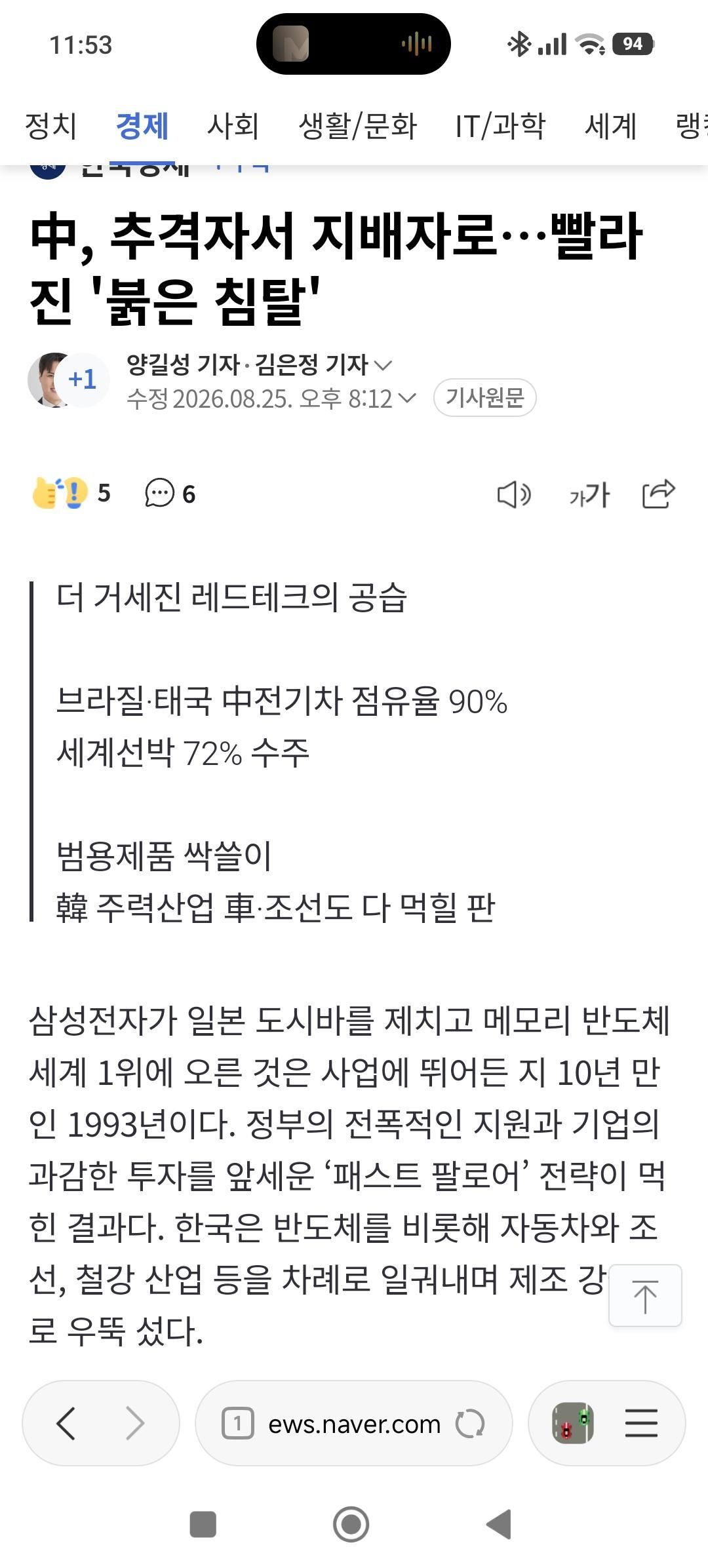
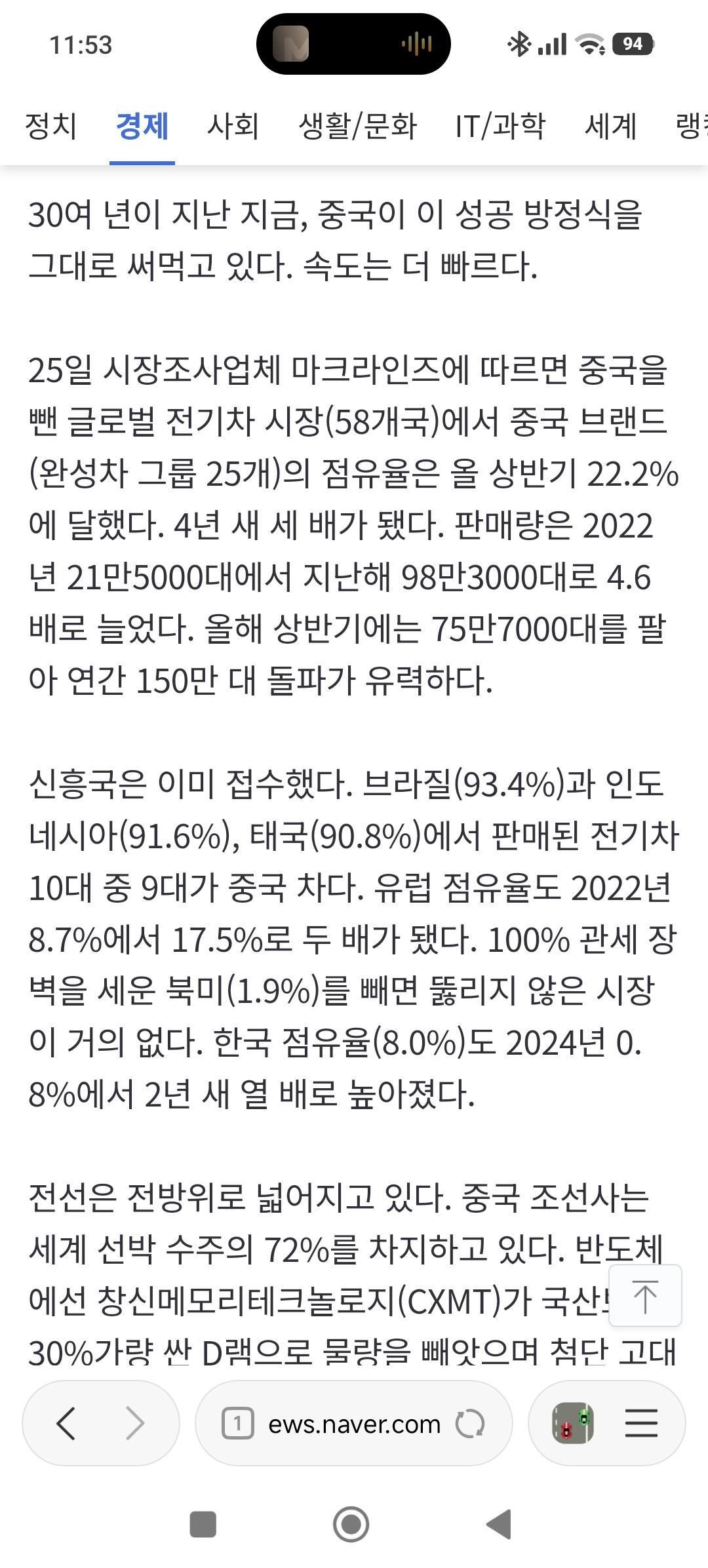
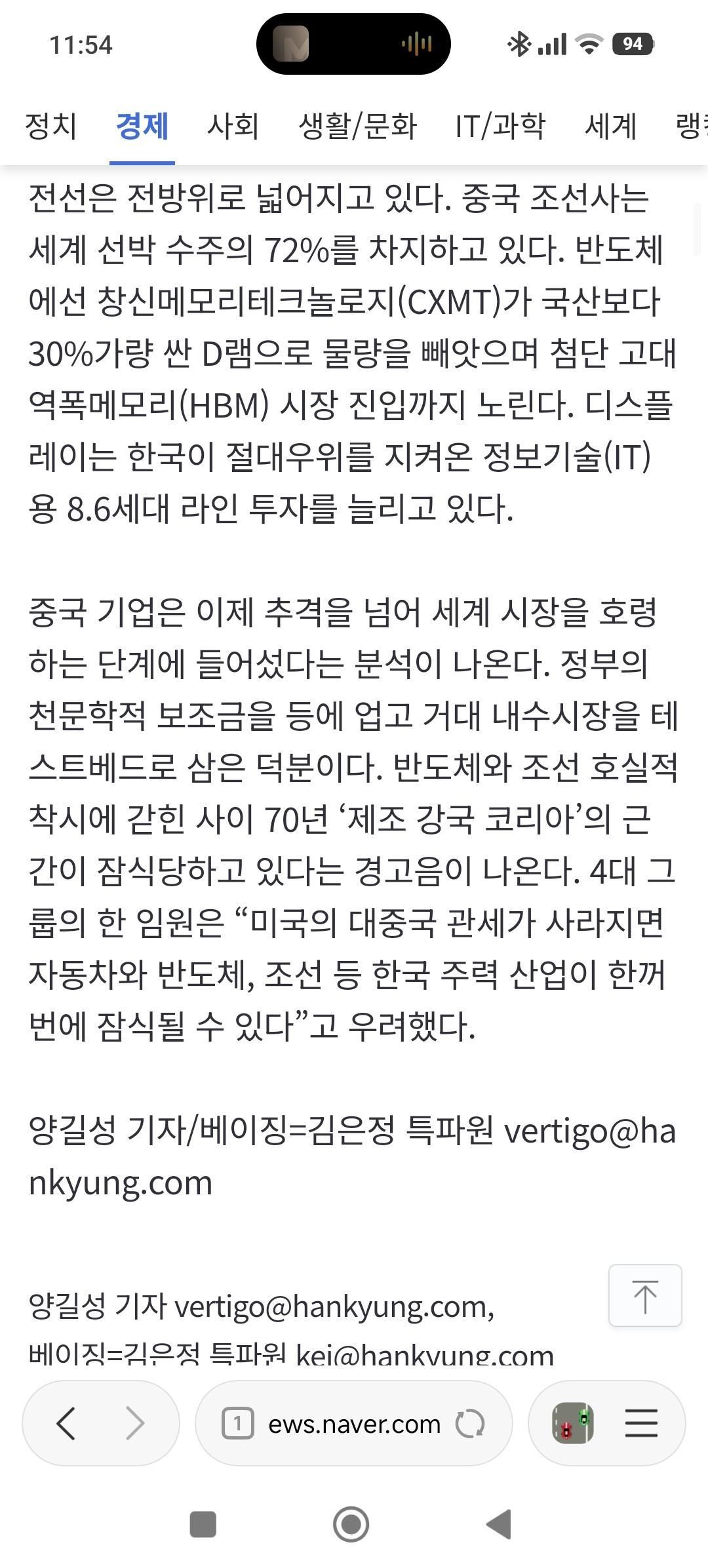
In the past, with its underdeveloped industries, China acted as the world's factory by bringing in licenses, core components, and equipment from the West, Korea, Japan, and Taiwan to assemble everything from light industry to electronics, IT, semiconductors, and heavy/chemical industries. However, now,
through "Made in China 2025," they are achieving self-sufficiency in intermediate goods and their overall industrial sectors.
By localizing and internalizing production, they are blocking the outflow of added value
and reclaiming it.
The rules have completely changed from the past.
Even for CNC machine tools, they localized up to 5-axis controllers even before Korea; this is proof that unless it is ultra-high-end, China no longer imports machine tools but uses domestic ones and is even exporting them in massive quantities. The same applies to industrial robots.
In the automotive industry, they are phasing out joint venture licenses and becoming self-sufficient, creating a closed-loop system with proprietary technology to prevent the outflow of added value while simultaneously becoming the world's number one exporter.
In effect, the world will be divided into US supply chains and Chinese supply chains.
Once they achieve complete self-sufficiency in DRAM and NAND flash, it will be
a disaster for Korea. How should we navigate this coming wave?
In the past, because Korea held the advantage, we could enter the market early and recoup capital during the time it took for China's localization to cause margin collapse and a shift to a deficit. Now, if China enters the market first, Korea cannot enter at all.
A Korean-style recession is coming due to China's self-sufficient industries. Unless it is something like HBM that China cannot do immediately, the graph
is drawing a "K-shape."
Currently, realistically, Korea's potential growth rate is below 1 percent.
Comments 0