Looking at the current state of affairs, I think the US should have just conducted the same air strikes in '94
When people suggest that air strikes should have been carried out before nuclear armament,
some argue that long-range artillery is also extremely powerful.
However, the following is a statement from the US side that says otherwise.
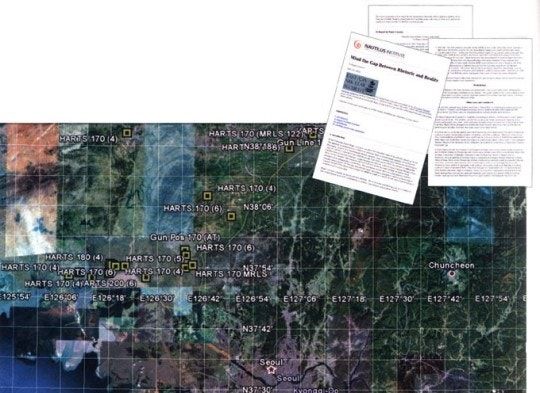
This is content released by the US Nautilus Institute;
it states that the number of casualties from conventional long-range artillery fire in the early stages of war
would be a maximum of under 30,000.
Even in the worst-case scenario where our civilian areas are shelled continuously for an entire week,
they say it would be a maximum of under 80,000.
In 1994, it was shortly after the collapse of the Soviet Union,
and China's military power was essentially at the level of North Korea (minus nuclear weapons),
and since they were in the middle of economic development, they couldn't defy the US.
[Special Feature | The Truth About North Korea's Long-Range Artillery] 325 million vs. 2,811: Polar Opposite Lethality Estimates
2015.01.26
Synthesizing data previously reported to the National Assembly by the ROK Joint Chiefs of Staff,
the estimated damage assumed by military authorities is, quite literally, astronomical.
The starting point is that, based on the first hour of the outbreak of war, 170mm self-propelled guns can fire a total of 3,618 rounds, and 240mm multiple rocket launchers can fire 12,068 rounds.
If you multiply this number by the lethal radius of each shell, 31.6% of the entire area of Seoul would receive a barrage of bombs within one hour, and 3.25 million citizens would suffer direct damage through death or injury.
On the other hand, the perspective of US experts is different. A representative case is the comprehensive survey simulation data prepared by the Nautilus Institute in 2012.
This report, written by retired officials who have worked in threat assessment for the US Army for over 20 years, criticizes the previous predictions by the ROK military as being prepared while ignoring major variables.
Considering the high rate of duds in North Korean artillery power, which reaches up to 25%, and the tactical characteristics that force them to save a significant portion as reserve forces, the actual number of shells falling on the South would be difficult to exceed 4,000 rounds in the first hour after the outbreak of war, even with a high estimate.
What makes the difference even greater is the lethality of these shells.
The explanation is that shells designed to increase range by reducing the amount of explosives find it difficult to penetrate not only major shelters like subway stations but also the concrete walls of general buildings or apartments.
Through this simulation analysis, the Nautilus Institute judges that the casualties, including wounded and dead in the early stages of war, would be at least 2,811 and would be difficult to exceed a maximum of 29,661.
Furthermore, once the ROK and US forces engage in counter-battery fire, North Korean long-range artillery will be destroyed at a rate of dozens of units per hour, and more than half will be neutralized after 24 hours. Even under the extreme assumption that North Korea pours shells only toward civilian areas, the maximum expected damage throughout the first week after the outbreak of war would be around 80,000 people.
[Special Feature | The Truth About North Korea's Long-Range Artillery] 325 million vs. 2,811: Polar Opposite Lethality Estimates
n.news.naver.com
[Weekly Dong-A] One night in February, the North Korean long-range artillery tunnel positions deployed in the Panmun area of Kaesong Special City begin to open one by one. The cloudy and foggy weather in the front line ...

Comments 0