The Innovativeness of the Saemangeum Water Purification Project.jpg

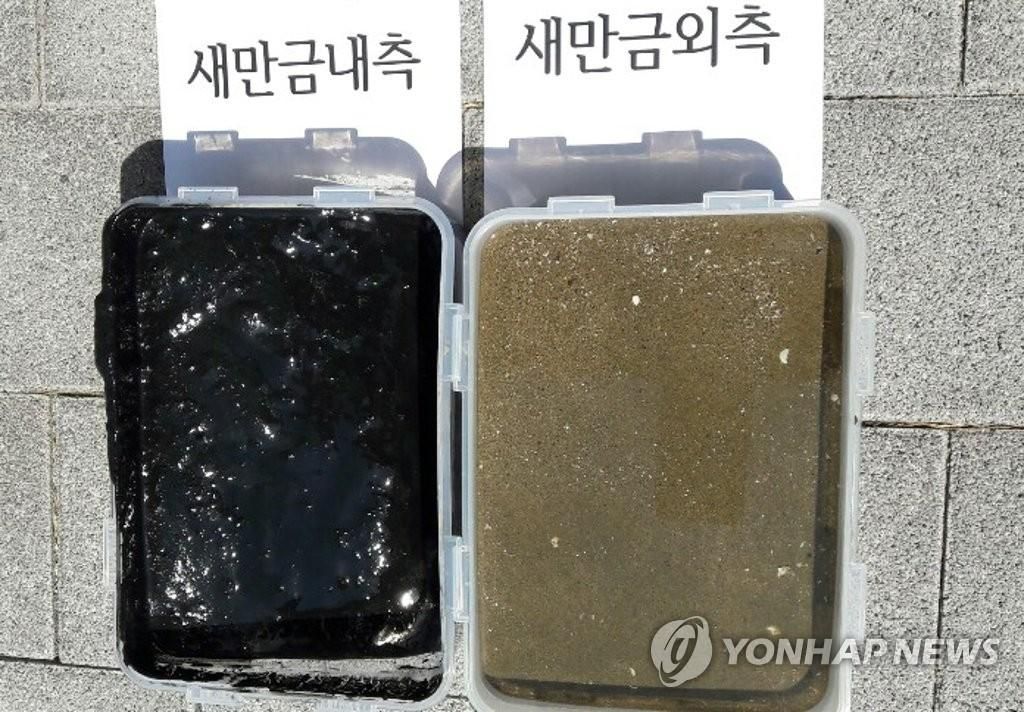

Not only Saemangeum but also the Yeongju Dam is experiencing continuous water quality deterioration, with organic sediment accumulating and rotting at the bottom of the river.
This is not just a failure in Korea; it has been a failure for the G8 and the United Nations.
The prevailing belief was that breaking weirs or dismantling dams was the only way to improve water quality.
It was thought that one could not overcome nature.
However, it is not as if there is no solution.
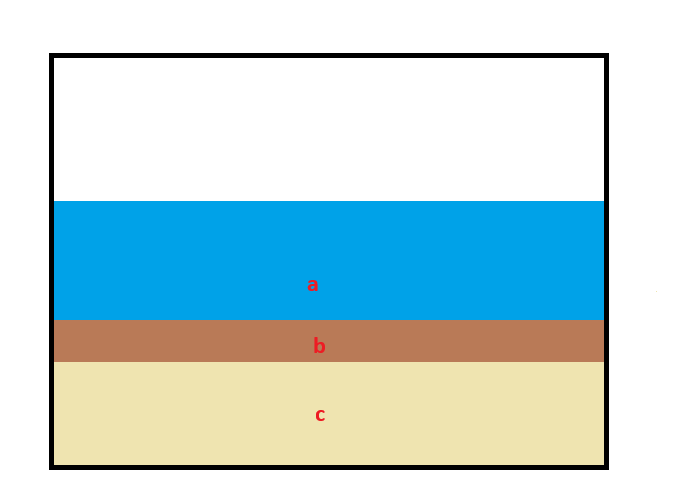
If you look at a cross-section of a dam or Saemangeum, organic sediment is piled up on top of the sand layer,
and an anoxic layer is visible above it. When weirs are installed and the water level rises, a process called buoyancy filtration occurs;
high-density organic matter settles at the bottom of the river, while clean water rises to the top.
At this time, microorganisms decompose these pollutants at the bottom of the river, but when oxygen is depleted, the microorganisms die off and the matter begins to rot.
Therefore, the fundamental solution is to install oxygen supply pipes every 500m near the riverbed at depths of -3m to -10m
to supply oxygen 24 hours a day.
This allows the settled pollutants to be decomposed and absorbed at the riverbed, increasing the microbial population, which exponentially enhances biological water purification capacity.
Even without preventing the influx of nutrients, the system adapts to the ecosystem.
Furthermore, by releasing large amounts of shellfish, which act as biological filters, they perform filter feeding, causing clean, filtered water to rise.
It is about utilizing microorganisms and living organisms.
A single Saemangeum project could achieve a water purification capacity greater than all of South Korea's sewage treatment facilities combined.
When 100,000 tons of fertilizer were added, this fertilizer settled at the bottom of the river, and microorganisms began to proliferate.
Typically, when algal blooms occur, they appear on the surface after all oxygen at the bottom of the river has been depleted,
but in this case, microorganisms at the riverbed continuously absorb the nutrients.
A stratification phenomenon occurs: water with low nutrient density stays on top, while water with high density stays at the bottom.
A protective layer against algal blooms is formed.
As time passes, the nutrient concentration at the riverbed and the surface becomes similar, and the number of microorganisms increases exponentially.
After adding 100,000 tons, the nutrient levels dropped after 10 days.
Then, when 300,000 tons were added, the nutrient levels dropped in just 3 days.
When 1,000,000 tons were added, even that amount was absorbed in 3 days.
From that point on, if 1,000,000 tons are added, it is all absorbed in a single day.
In this way, the biological treatment capacity is determined by the amount of microorganisms × contact area × oxygen supply amount,
creating a water purification facility superior to all sewage treatment plants in South Korea combined.
Starting with the Yeongju Dam, all dams, reservoirs, and lakes in South Korea can be upgraded to Grade 1 status.
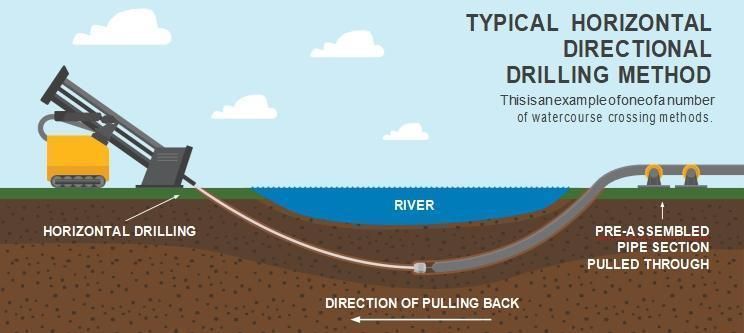
Using the HDD (Horizontal Directional Drilling) method, we can drill through the riverbed and bury oxygen supply pipes at a target depth where they will not be damaged even during dredging.
We can then directly spray nano-bubble water or blast water dissolved with nano-bubbles at high pressure.
While membrane filters operate at around 20 BAR, this type of sand layer only requires 0.2 BAR to 2 BAR;
by alternating pressure, we can break up the sludge in the sand layer.
We can also release large amounts of microorganisms that decompose sludge.
If one unit is installed every 500m, we can install solar generators and benches every 500m to create rest areas;
the structures that provide shade from the sun can also serve as shelters from the rain.
That electricity can supply oxygen. If the distance between weirs is 20km, 40 units would be installed;
units 1 through 20 could operate in the morning,
and units 21 through 40 could rotate and operate in the evening.
We can configure it so that more units operate at points where dissolved oxygen depletion occurs more rapidly, depending on the characteristics of the dam or river.
This project turns dams, reservoirs, and lakes into water purification facilities.
By utilizing microorganisms and living organisms.
People criticized how Korea could carry out the Four Major Rivers Project when the G8 had failed for 40 years despite using every possible method, claiming the weirs would eventually be dismantled.
However, this project can change the G8's water resource management guidelines.
This is because it provides incredible water purification capacity at a very low cost.
Consequently, for lakes that have a certain water level and volume where water stagnates, such as reservoirs and dams,
legislation could be introduced to mandate the installation of oxygen supply facilities at the riverbed.
This is a world-class project that could lead beyond Korea to the US, Japan, China, Russia, the EU, and all other nations to establish new water management guidelines.
It is a monumental achievement worthy of a Nobel Prize.
We must find a way to utilize nature without opposing it.
Comments 0