What Is Duty Drawback? The Refund Many Exporters Never Claim
If you import materials, pay duty on them, and then export the finished product, many countries will give that duty back. Plenty of small exporters never claim
Trade insights from the team
Only operators can post in this board.
If you import materials, pay duty on them, and then export the finished product, many countries will give that duty back. Plenty of small exporters never claim
Before goods leave the country, customs has to know they are leaving. Here is how export clearance works, who is responsible for the declaration, what goes into
A certificate of origin is not finished when it is issued. The real test comes years later, when the importing country's customs asks you to prove it. Here is t
One number decides your buyer's duty rate, your FTA eligibility and whether the goods need a permit. Here is how HS codes are structured, how to classify a prod
Ocean freight is not billed by volume or by weight. It is billed by whichever is larger. Here is how CBM works, what a container actually holds versus what the
When a letter of credit costs too much and open-account T/T feels too risky, documentary collection is the middle ground. Whether the bank hands over your docum
Your buyer wants to pay by T/T. Should you accept? The decisive difference between a letter of credit (LC) and a telegraphic transfer is what the bank is obliga
A freight forwarder owns no ships. So why do exporters book through one instead of going straight to the carrier? Here are the five things forwarders actually d
The freight matched the quote, then a second invoice shows up. Something about handling the container too slowly. The two charges sound alike and occur close to
Book a whole container, or share space with other shippers? Deciding on cargo volume alone can cost you more than it saves, because the two options are priced o
A single unit of difference is a discrepancy. The bank does not decide which figure is correct. It only registers that the two documents disagree. The short ans
Habit keeps FOB in use, but with containers the seller keeps bearing risk for a phase they no longer control. This is why the ICC recommends FCA. The assumption
Memorizing eleven terms one by one leads to confusion. Grouping them by their first letter makes the structure visible. What Incoterms determine Incoterms are t
Not 100 percent, not 120. There is a reason for the figure. And there is a trap that matters more than the number itself. Where 110 percent comes from Under CIF
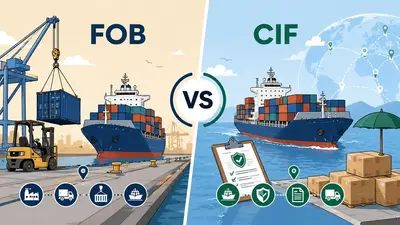
Risk transfers at the same point under both terms. Cost and documents work completely differently. Here is what should actually drive the decision. Start with w
The goods reached the port. The vessel did not. Loading cannot happen, so risk technically remains with the seller. Here is what Incoterms actually says about t
FOB is the Incoterm exporters encounter most often. Here is exactly where the seller's responsibility ends, when risk transfers, and what it means for your docu
CIF is one of the most widely used Incoterms in international trade, and one of the most misunderstood. The seller pays for insurance, but the buyer bears the r
Why a Checklist Beats Memorizing the Rules UCP600 has 39 articles, and no exporter needs to memorize all of them to run a clean letter of credit (LC) transactio
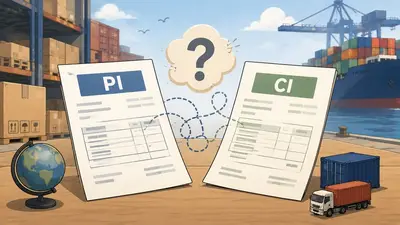
Both documents have the word "invoice" in the name. Both list the same buyer, the same goods, and often nearly identical numbers. That similarity is exactly why