FOB and Delayed Vessel Nomination: Who Bears the Risk?
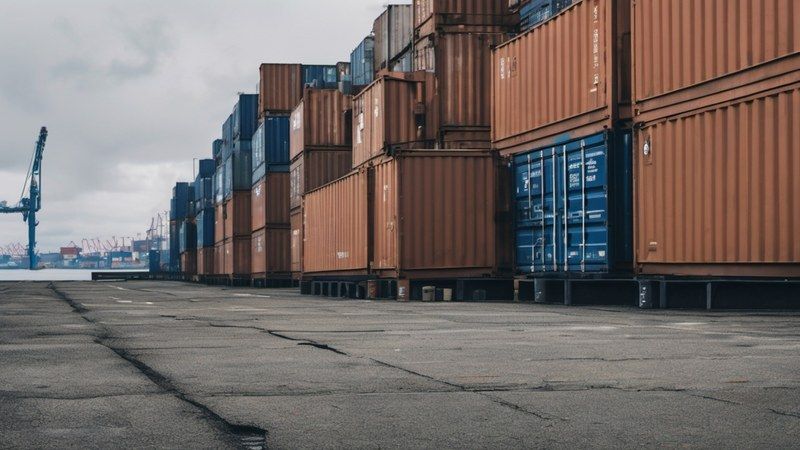
The goods reached the port. The vessel did not. Loading cannot happen, so risk technically remains with the seller. Here is what Incoterms actually says about this situation.
FOB risk transfer assumes loading happens
Under FOB, risk passes to the buyer the moment goods are placed on board the vessel at the port of shipment. The rule looks simple, but it rests on one assumption: that loading actually takes place.
And under FOB, the party that nominates the vessel and contracts for carriage is the buyer. The seller only loads onto the vessel the buyer names. No nomination, no loading.
The gap this creates
Here is how it plays out in practice. The seller delivered the goods to the port by the contractual date. But the buyer did not nominate a vessel, or the nominated vessel was delayed and has not arrived.
The goods sit in the port yard or a warehouse. Loading has not occurred, so by the strict rule, risk still rests with the seller. If fire, flooding, or theft occurs during this period, the loss falls on the seller, who is now carrying risk for reasons entirely outside their control.
The core problem
The seller has performed their obligation, yet continues to bear risk because of circumstances on the buyer's side.
How Incoterms 2020 addresses it
Incoterms 2020 closes this gap through early transfer of risk. Where the buyer fails to nominate a vessel, where the nominated vessel does not arrive on time, or where the nominated vessel is unable to take the goods, risk passes to the buyer from the agreed date or the expiry of the agreed delivery period.
One condition attaches to this. The goods must be clearly identified as the contract goods. If identical goods sit in a warehouse with no way to distinguish which units belong to this contract, early risk transfer does not apply.
In practice, shipping marks, segregated storage, and an inspection report are the tools that establish identification.
What about the costs
Risk is not the only thing that shifts. Additional costs arising from the buyer's failure to nominate also fall on the buyer. Port storage charges, warehousing fees, and extra handling costs caused by the delay are covered here.
The same identification requirement applies. And in practice, this is where disputes tend to arise: determining exactly which costs are attributable to the buyer's failure and from what date.
Free resource
CIF and FOB Practical Guide (PDF)
Risk transfer points for FOB and CIF, a clear split of seller and buyer obligations, and a pre-presentation checklist for letter of credit documents with the applicable UCP 600 articles cited. Includes a comparison table of all eleven Incoterms.
Download free → https://guild.tflowx.com/post/96
What to put in the contract
The Incoterms rule gives you a basis, but an explicit contract clause reduces disputes considerably. Three items are worth defining.
Nomination deadline. How many days before the shipment date must the buyer communicate the vessel name and arrival schedule.
Identification method. Shipping marks, storage segregation, inspection procedure. Whatever establishes that specific goods belong to this contract.
Cost allocation on delay. Who pays storage and additional charges, and from which date the allocation applies.
FOB is structurally a simple term. But that simplicity rests on both parties performing their role on schedule. Preparing for the moment that assumption breaks is what practice looks like.
#FOB vessel nomination #FOB risk transfer #Incoterms 2020 #delayed vessel FOB #early risk transfer #goods identification #export contract clause #trade practice #FOB storage cost #Incoterms risk
Comments 0