A method to achieve complete recovery even from Stage 4 terminal cancer.jpg
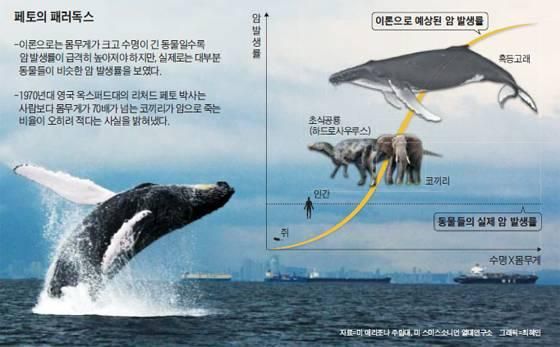

Whales and elephants have a large number of cells, so they should be more prone to cancer.
However, they do not develop cancer.
This is called Peto's Paradox.
The reason whales and elephants do not get cancer is due to their low metabolism and high cardiopulmonary endurance.
Human cancer cells also arise due to mutations.
Even healthy people who do not have cancer develop cancer cells every day, but they are removed by immune cells.
However, temporary abnormalities in immune cells can occur.
This happens when one continuously performs high-intensity anaerobic exercise without rest, leaving lactic acid accumulated for a long time.
At this point, cancer cells are created but are not removed by immune cells. Once they reach a size of 1cm or more, even if a normal immune system is maintained,
the high amount of oxygen consumed by the cancer cells themselves creates a hypoxic environment, which secretes lactic acid and vascular endothelial growth factors (VEGF) and similar growth factors,
thereby blocking the approach of immune cells. This is when it is said that one has cancer.
The surprising fact is that if you extract cancer cells from a cancer patient and react them with the patient's own immune cells, the cancer cells are removed by the immune cells.
In other words, for cancer patients, it was not a problem with the immune cells themselves, but a problem regarding the access of immune cells.
Even if cancer cells in elephants and whales reach 1cm, their low metabolism and high cardiopulmonary endurance make it difficult to create a hypoxic environment, preventing them from creating an environment that blocks immune cells.
"Terminal cancer" simply means that the cells have developed resistance to cytotoxic chemotherapy; it does not mean that treatment is impossible.
Cancer treatment methods that attack both healthy cells and cancer cells simultaneously are very primitive methods.
They are treatment methods that primitive tribes might use.
A new and effective way to treat cancer is as follows:
Through high-intensity interval training, you make not only cancer cells but all cells create a hypoxic environment.
Even without exercise, cancer cells are already creating a hypoxic environment, which gives them immunity against immune cells.
However, through high-intensity exercise, when the oxygen consumption of all cells and muscles increases, the aerobic environment becomes hypoxic, and the hypoxic environment becomes anaerobic.
In the morning on an empty stomach, drink a beverage containing sugars and about 100mg of caffeine, and perform interval training for about 1 hour and 30 minutes.
Then, as the oxygen supply to the cancer cells decreases, the cancer cell DNA is damaged and they are removed by macrophages.
This is how targeted therapy against cancer cells is carried out.
When exercise reaches a point where cancer cells can no longer be removed, it means the environment has reached a state where even high-intensity exercise cannot create an anaerobic environment,
which means the cancer cells can no longer create an environment that blocks immune cells.
If you perform 1 hour and 30 minutes of high-intensity interval training in the morning, take sufficient rest, and then do about 3 hours of slow walking in the evening,
you block the oxygen supply in the morning to remove cancer cells, and in the evening, you improve blood flow to increase the response rate of immune cells against cancer cells.
If you combine these two types of exercise and receive autoimmune therapy, any form of cancer can be treated.
If you divide exercise into two categories—intervals and slow walking—gradually increase the intensity, and receive autoimmune therapy, a complete cure is possible.
Being in the terminal stage of cancer does not mean treatment is impossible. It only means that the cells have developed resistance to cytotoxic chemotherapy.
Comments 0