The reason why they tried to dismantle all the Four Major Rivers weirs.jpg
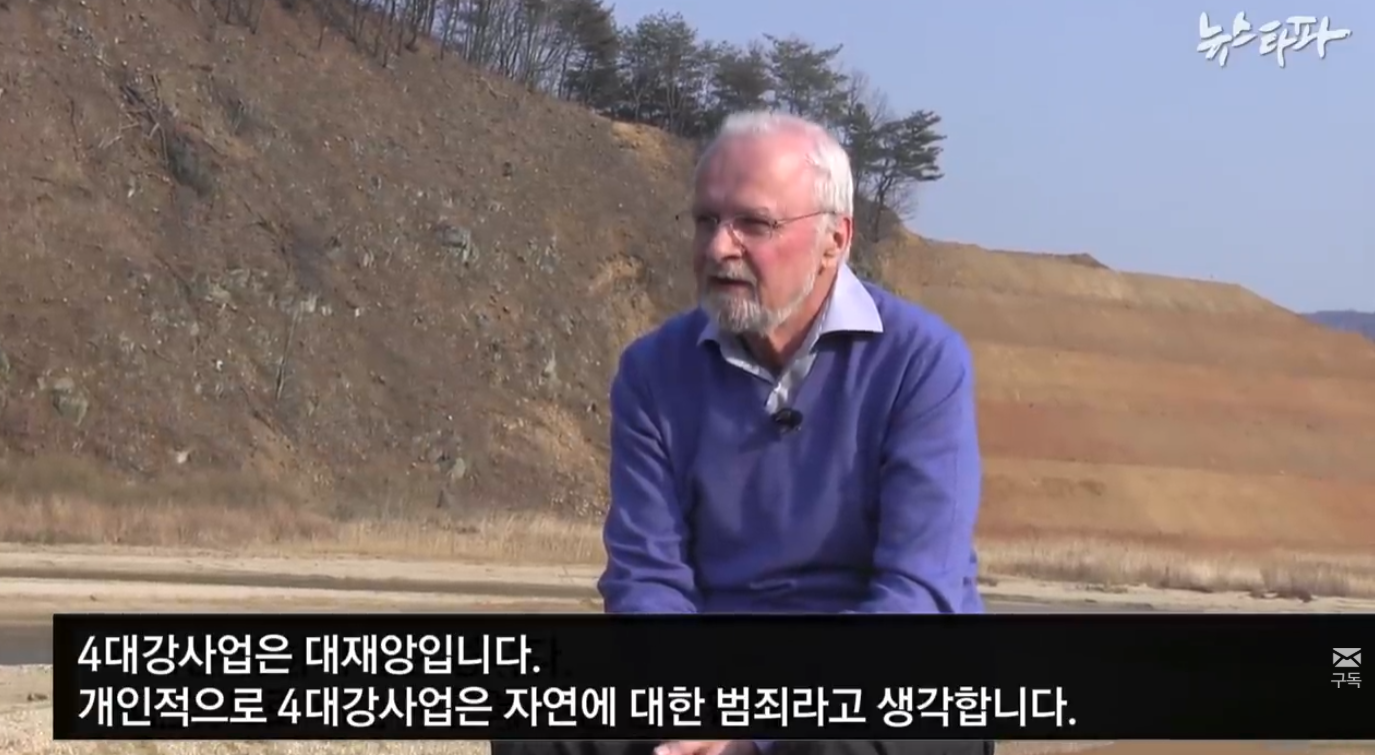

Professor Bernhard, shown in the photo, says he cannot understand why Korea is trying to pursue a project that Germany abandoned 80 years ago.
He counters by asking, "Nuclear bombs are also a product of civilization. Does that make them good?"
"We are also committing crimes in the name of civilization. Development is not always good. Civilization also has its failures.
The advancement of civilization is not always a good thing.
If an expert calls the Four Major Rivers Project a 'restoration' or 'ecosystem improvement,' they are either so incompetent that it is deeply embarrassing for an expert,
or they have been bought (by money).
That is the only way to put it.
Since a large amount of money flowed into the Four Major Rivers Project, it must have been possible to bribe such people with that massive amount.
Even if I were offered a billion euros, I could not do such a thing, yet they did.
Therefore, Korea will eventually dismantle the weirs; it is just a matter of time.
He said it is a question of how much more cost they will pay and how much time they will waste, and that the sooner they dismantle them, the greater the benefit.
This is because Germany suffered much damage 80 years ago due to the aftereffects of installing weirs, and after mobilizing all means, they concluded
that dismantling the weirs is the way to restore naturalness and improve water quality.
And they dismantled the weirs on the upper reaches of the Isar River.
Are weirs truly structures that worsen water quality?
However, there is a way to turn them into water purification facilities while installing them.
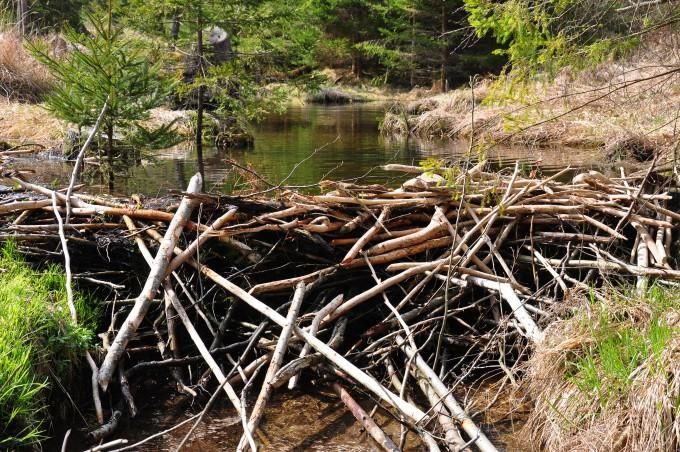
Looking at dams made by beavers, as the water volume increases, the water quality begins to clear up.
Pollutants and organic matter settle at the bottom of the river, and clean water begins to flow on top.
However, if excessive pollutants flow into this area, the microorganisms that decompose organic sediment at the riverbed
consume the dissolved oxygen, causing the microorganisms to die and the self-purification system to stop.
Then, algal blooms occur and water quality deteriorates.
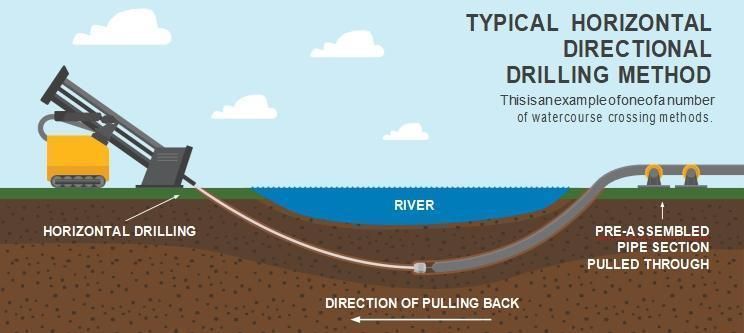
So, using the HDD method to dig under the road,
oxygen supply pipes are buried between -1m and -10m in the sand layer at the riverbed every 500m along the river,
and high-pressure water with high dissolved oxygen is used to crush and push out the organic sediment trapped between the sand.
Then, oxygen is continuously supplied at a pressure of 0.2 BAR.
In the case of a 20km distance between weirs, about 38 units would be installed; for ease of calculation, if we say 40 units,
units 1–10 are supplied with oxygen for 6 hours, 11–20 for 6 hours, 21–30 for 6 hours,
and 31–40 are supplied with oxygen.
First, high dissolved oxygen is created in the high-pressure water, it is sprayed to crush the sediment,
and oxygen is supplied 24 hours a day. At this time, beneficial microorganisms can be introduced.
Microorganisms decompose organic sediment and consume oxygen, and based on the oxygen consumption rate, AI adjusts the oxygen supply points
to supply oxygen efficiently. If dissolved oxygen decreases in all areas, all 40 units can run 24 hours a day.
By supplying oxygen this way, microorganisms proliferate and biological treatment capacity increases, turning the river into a water purification facility.
Once this project is completed, the Yeongju Dam will clear its name;
it will become a facility that purifies water by filtering and settling organic sediment through buoyancy filtration,
and even performs self-purification as pollutants are decomposed and absorbed by microorganisms at the bottom of the river.
Therefore, a law should be made to mandate oxygen supply facilities in lakes where the water exceeds a certain volume and there are periods of stagnation.
Then, all rivers, reservoirs, lakes, dams, and estuaries can be turned into Grade 1 water.
A river with weirs becomes a river when it rains and a lake when it does not rain;
if it rains frequently throughout the four seasons, weirs might not even need to be installed.
The success of this project would change all water management guidelines worldwide,
it is a project that would clear the stigma of weirs and dams,
and it is a world-class project in academia worthy of a Nobel Prize.
Comments 0