How to Respond to an Letter of Credit Discrepancy Notice — A Step-by-Step Guide for Exporters
You've received a discrepancy notice from the bank. The payment clock has stopped. Here's exactly what to do — and what not to do — in the hours and days that follow.
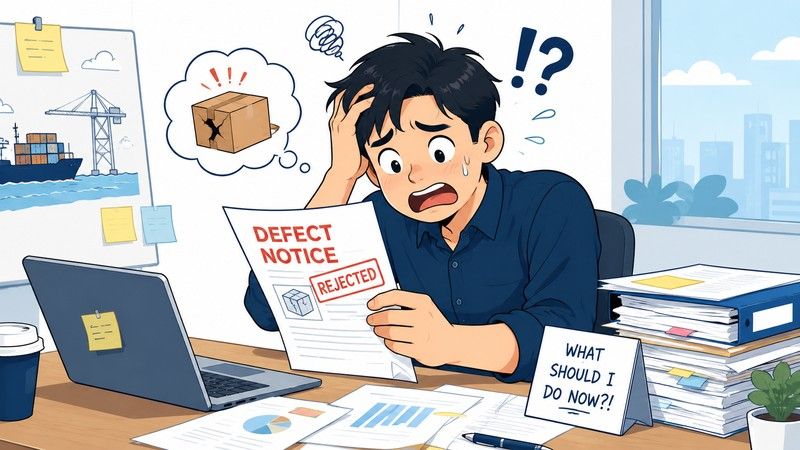
First: understand what just happened
A discrepancy notice means the presenting bank or issuing bank has found one or more differences between your submitted documents and the terms of the letter of credit (LC), the requirements of UCP 600, or both. Under UCP 600 Article 16, the bank has up to five banking days from the day after presentation to issue this notice. If it arrives, payment has been placed on hold.
This is not the same as a final rejection. A discrepancy notice opens a decision window — for the bank, for the applicant (your buyer), and for you. How you respond in the next 24 to 72 hours determines whether payment is recovered quickly or whether the situation escalates into a formal dispute.
Step 1: Read the notice carefully and document everything
The discrepancy notice must identify the specific discrepancies found. Under UCP 600 Article 16(c), the bank is required to state each discrepancy — it cannot issue a vague refusal. Read the notice against this standard: if the discrepancies listed are not specific, that itself may be relevant later.
Write down the exact time and date you received the notice, the name and contact at the issuing bank, every discrepancy listed, and which documents each discrepancy relates to. This record becomes important if the situation moves toward a formal dispute or if you need to demonstrate that you responded within a reasonable timeframe.
Step 2: Verify whether each discrepancy is valid
Not every discrepancy notice is correct. Banks occasionally flag issues that don't constitute discrepancies under UCP 600 and ISBP 821 — for example, minor typographic variations that don't affect the meaning of a document, or differences between documents that the rules explicitly permit.
Check each flagged item against:
The exact wording of your LC
UCP 600 Article 14 (the document examination standard)
The specific article governing that document type — Article 18 for invoices, Article 20 for bills of lading, Article 28 for insurance documents
ISBP 821 guidance for that document category
If a discrepancy appears incorrectly cited, note this in writing. You may need to formally contest it. If the discrepancy is valid, move to the next step.
Important: Under UCP 600 Article 16(f), if the issuing bank fails to act in accordance with the Article 16 provisions — including the five-banking-day limit or the requirement to specify discrepancies — it loses the right to claim that the documents are discrepant. A bank that notifies late or incompletely may be precluded from refusing.
Step 3: Contact your buyer immediately
This is the most time-sensitive action. When a bank holds documents for discrepancies, it typically asks the applicant (your buyer) whether they are willing to waive the discrepancies and instruct the bank to release payment anyway. Under UCP 600 Article 16(b), the bank may approach the applicant for a waiver at any time after issuing the discrepancy notice.
Don't wait for the bank to do this on its own. Call your buyer directly. Explain the discrepancy, clarify whether it affects the underlying goods or shipment in any way (in most cases it doesn't), and ask whether they are willing to instruct the bank to waive it. A buyer who wants the goods and trusts the relationship will often waive minor discrepancies immediately.
Get the waiver instruction in writing, even if it starts as a phone conversation. The bank will require a formal instruction from the applicant before releasing payment.
Step 4: Decide between waiver, correction, or re-presentation
Once you know whether the discrepancy is valid and how your buyer is responding, you have three options:
Option A — Waiver by the applicant
Your buyer instructs the issuing bank to waive the discrepancies and release payment. This is the fastest resolution — if the buyer agrees, payment can proceed without you touching the documents again. The bank will charge a discrepancy fee (typically $75 to $150 per discrepancy, depending on the bank) but payment otherwise continues on the original LC terms.
Option B — Document correction and re-presentation
If the buyer won't waive, or if the discrepancy is significant enough that re-presenting corrected documents makes more sense, you can amend and re-present. Note that re-presentation resets the bank's examination timeline — they get another five banking days from receipt of the corrected set.
Before re-presenting, verify that the LC's presentation period and expiry date still allow it. Under UCP 600 Article 14(c), documents must be presented within 21 calendar days after the date of shipment, and before the LC's expiry date. If either deadline has passed, re-presentation may not be possible without an LC amendment.
Option C — Acceptance on approval basis
The bank releases the documents to the applicant "on approval" — meaning the buyer takes possession of the goods and agrees to pay, but payment is not guaranteed by the LC. This removes the payment security that the LC was designed to provide. Use this option only if you have strong reason to trust the buyer and no other path is available.
Cost of a discrepancy cycle
Bank discrepancy fees: $75–300 per incident. Payment delay: 7–14 days minimum for waiver processing; longer for re-presentation. Potential buyer leverage: some applicants use discrepancies to negotiate price reductions before issuing a waiver.
Step 5: Respond to the bank in writing
Whatever path you choose, confirm it in writing to the bank. If you're contesting a discrepancy, state the specific UCP 600 or ISBP 821 provision that supports your position. If you're accepting the discrepancy and requesting waiver processing, say so explicitly and confirm that you've spoken with the applicant. If you're re-presenting, confirm which documents are being replaced and when they will arrive.
Written communication creates a record of your response timeline, which matters if the situation becomes contested. Banks are required to hold discrepant documents at the presenter's disposal once they issue a refusal notice — if you don't respond, they can return the documents after giving notice of that intention.
Step 6: Track the bank's response deadline
Once you re-present corrected documents, the five-banking-day clock starts again. Track this date explicitly. If the bank fails to issue a decision within that window, the same preclusion rules under UCP 600 Article 16(f) apply — they cannot later claim discrepancy on documents they held past the deadline without communicating a decision.
Most exporters don't track this actively. The bank's failure to meet its own deadline is a legitimate basis for challenge, but only if you know it happened.
The only better outcome: no discrepancy notice at all
Every step in this guide is a response to something that could have been avoided. The discrepancy notice arrives because the document set didn't pass examination — and in most cases, the issue was present before the documents left the exporter's desk.
Pre-presentation checking — reviewing each document against the LC terms, UCP 600, and ISBP 821 before submission — eliminates the majority of discrepancy notices before they can be issued. The cost of a thorough pre-presentation review is a fraction of the cost of a single discrepancy cycle, even when the cycle ends with a waiver.
T flow LC Checker runs 53 rules grounded in UCP 600 and ISBP 821 against your document set before you present to the bank — flagging the issues this guide covers, while there's still time to fix them.
https://guild.tflowx.com/lc
#LCdiscrepancy #letterofcreditdiscrepancy #UCP600 #LCwaiver #exportdocumentation #trade finance #discrepancyresponse #documentrepresentation #ISBP821 #Tflow
Comments 0