The difference between the Rebuilding Korea Party and the Justice Party
While both the Justice Party and the Rebuilding Korea Party are important pillars of the pan-progressive camp,
at the same time, they can pose a risk of causing the large ship of the Democratic Party to sink because it cannot avoid these small rowboats.
They seem similar, but there are differences between them.
First, in the presidential election before last,
the votes cast for Sim Sang-jung of the Justice Party were approximately 40,000.
If these votes had gone to Lee Jae-myung,
it was a margin by which Lee Jae-myung certainly could have won.
Compared to Lee Jae-myung's total votes,
the Justice Party's votes were a truly negligible 0.7% of the total,
which, in short, was an act akin to political "squatting."
Furthermore, the votes that had previously supported the Justice Party through proportional representation
began to deviate significantly following the Ryu Ho-jung incident,
leading to the virtual disintegration of the Justice Party
and the complete breakdown of the party.
On the other hand, the Rebuilding Korea Party did not field a candidate in the last presidential election.
Not only that,
during the local elections, Cho Kuk supported the campaigns of Democratic Party candidates.
However, when Ha Jung-woo moved down to Busan, where Cho Kuk intended to run,
Cho Kuk moved to Pyeongtaek, which was a by-election district.
Meanwhile, the Democratic Party fielded a candidate in the by-election district caused by a Democratic Party candidate,
and the result was a margin of 34:33.5:32.5,
where Yoo Ui-dong was elected and Cho Kuk finished 3rd, leading to criticism that he hindered the Democratic Party.
To borrow the assessment of Cho Seong-eun,
since Yoo Ui-dong was the most normal figure in the People Power Party
and Kim Yong-nam was the worst candidate in the history of the Democratic Party,
it was analyzed that they absolutely had to unify to win,
and that analysis proved correct.
In terms of vote share, this is not at a level that can be dismissed as mere "squatting."
Unless they engage in a legitimate M&A or integrate, it was a fight they were bound to lose.
Looking at this political landscape,
the Rebuilding Korea Party will no longer make concessions in future by-election districts,
and 40% of the Ban-seok votes at the national convention—
meaning 16% of the total—might go to the Rebuilding Korea Party.
If things continue this way, the entire pan-Democratic camp will collapse.
It is uncertain if things would be different if Kim Min-seok had beaten Jung Chung-rae by a double margin,
but the result of 51:45 between Jung Chung-rae and Kim Min-seok
carries great implications for the future nomination of Democratic Party lawmakers.
To capture the "house rabbits" (loyal supporters) who are leaving and to recover the traditional support base,
two things must happen:
- They must prove themselves through competence.
- They must prove it through results, not through words or media play.
- They must show competence so that the "house rabbits" who left the Ban-seok camp return and become close allies.
- Candidates with a broken sense of history must be filtered out during the nomination process.
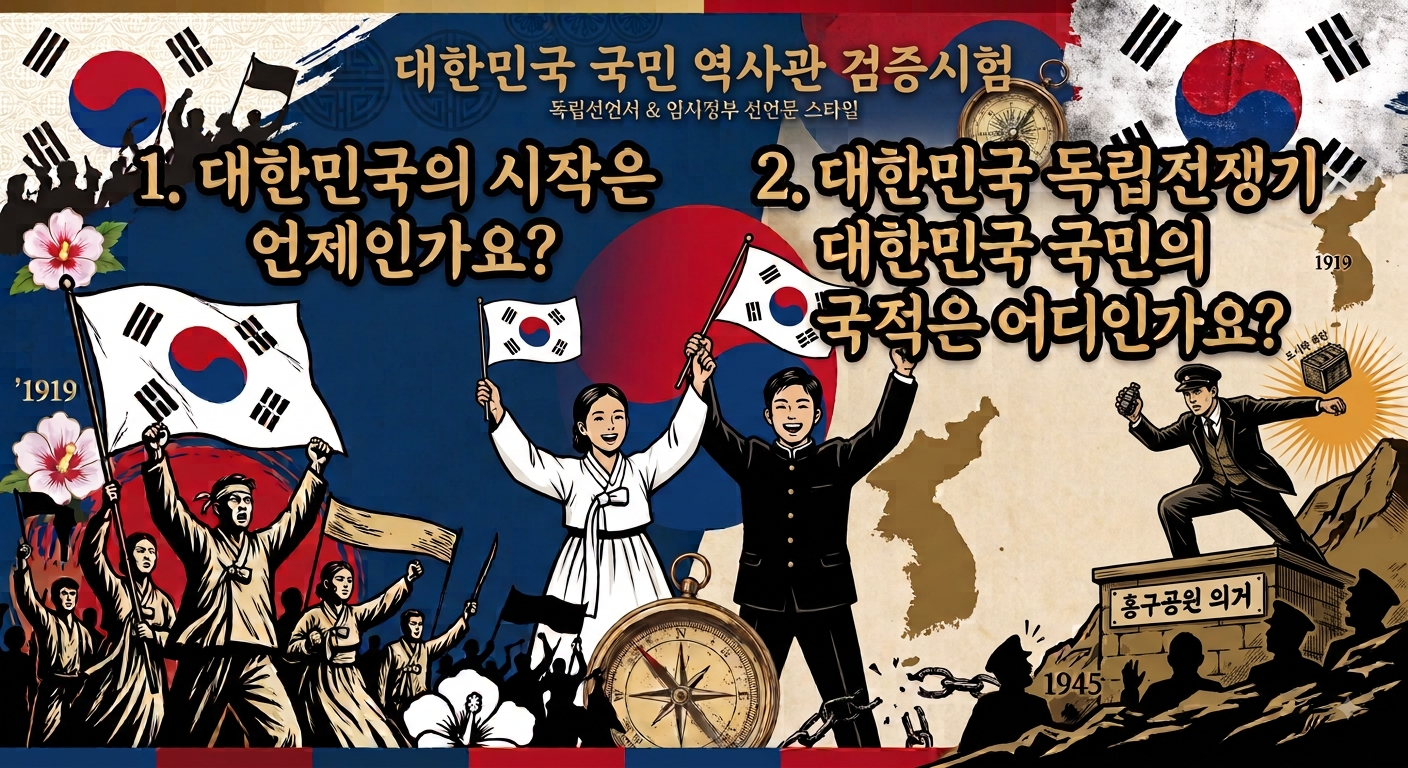
- They must engrave in their bones once again that the roots of the Democratic Party's view of history descend from the Provisional Government, and they must filter out candidates who hold New Right pro-Japanese colonial views.
If these two things are achieved, the Rebuilding Korea Party will lose its reason for existence and disappear,
and the "house rabbits" who left will return to the Democratic Party.
Comments 0