AI in Trade: 5 Things AI Actually Does in Export Operations
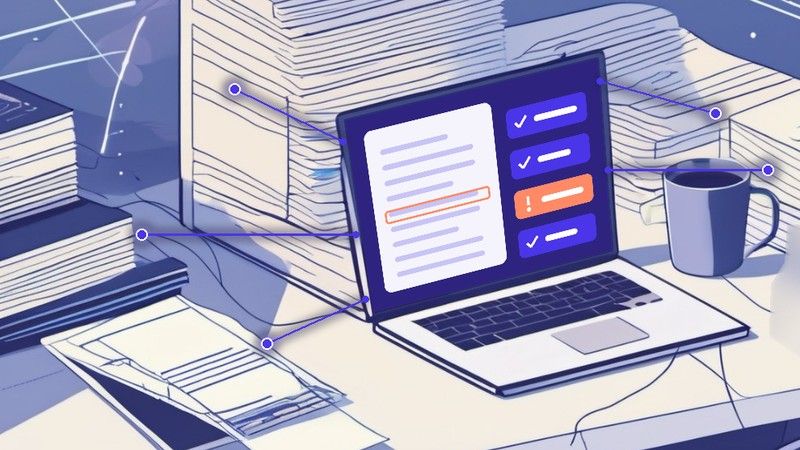
AI in trade is not a distant future. It is AI taking on the work exporters repeat every day: drafting documents, checking that they match, writing emails in another language. Here is what you can hand over, and what still needs a person.
Most trade companies want it. Few use it.
In a 2025 survey by the Korea International Trade Association, 78.0% of trade companies said they needed AI to work more efficiently. Only 16.9% said they were actually using it to raise productivity or run tasks.
The top barriers were cost and a lack of specialist staff. In practice, many companies don't know what to hand over first, so adoption feels like a large, risky investment.
5 things AI does in trade operations
TaskWhat AI doesWhat a person does1. Drafting documentsDrafts quotations, proforma invoices, commercial invoices and packing listsConfirms prices, quantities and terms2. Checking documentsCompares a letter of credit (LC) with shipping documents and flags mismatchesDecides what to correct3. CommunicationDrafts emails, translates, summarizes and sorts incoming mailChecks any sentence that makes a commitment4. Looking things upSuggests HS code candidates, import rules and certification needs by countryConfirms with the official source5. Tracking the workflowTracks each deal from quote to contract, shipment and paymentMakes the call when something is stuck
All five are repetitive and rule-based. That is where AI pays off fastest. Negotiating price or deciding whether to take a deal involves judgment and accountability, and that stays with people.
What AI does not replace
Final HS classification: AI narrows the options. If classification is unclear, an advance ruling from customs settles it.
LC document acceptance: The bank decides whether documents comply. AI's job is to catch likely discrepancies before you present.
Contracts and legal questions: Interpreting clauses or handling disputes needs a professional.
General AI vs trade-specific AI
General tools like ChatGPT are fine for emails and translation. Document checking is different. A general model produces a plausible answer but often can't show which rule it relied on. On an LC, "probably fine" is worth nothing.
Trade-specific AI starts from the rules: UCP 600 and ISBP 745 for documentary credits. It shows which field breaks which rule, so a person can verify the result. That traceability is the point.
How much time it saves
In a competitive PoC with POSCO International covering 2,000+ trade documents, T flow placed first on technical score. Document review that took 2 to 4 hours by hand came down to under 15 minutes.
Where to start
You don't need to change everything at once. Start with the task you repeat most often and that costs the most when it goes wrong. For most exporters, that is documents. One typo that becomes an LC discrepancy can delay payment or add fees.
A practical split: use general AI right away for low-risk work like emails and translation, and use a trade-specific tool where you need evidence, such as LC checking.
What may come next: payment
Once documents are verified automatically, payment released on the basis of that verification becomes a possibility. Stablecoin settlement is one approach under discussion, with the potential for faster settlement and fewer intermediaries than a bank transfer.
Rules differ by country and are still taking shape in many markets. Check what your jurisdiction allows before accepting payment this way.
Key takeaways
AI in trade means AI taking on repetitive trade tasks.
Drafting, checking, communication, lookups and workflow tracking are the main areas.
HS classification, LC acceptance and legal calls stay with official bodies or professionals.
Document checking needs rule-based, trade-specific AI.
Start with the documents you handle most.
A first task to hand over
If you trade on LCs, start with document checking. T flow L/C Checker compares the credit with your shipping documents and flags likely discrepancies, with the rule behind each one.
Comments 0