Demurrage vs Detention: Why the Extra Invoice Arrives

The freight matched the quote, then a second invoice shows up. Something about handling the container too slowly. The two charges sound alike and occur close together, but they are not the same thing.
The distinction in one line each
Demurrage applies while the container sits inside the terminal
Detention applies after you take it out and return it late
Demurrage works like a storage charge. Once a container is discharged from the vessel and stays in the terminal beyond the free period, the clock starts.
Detention is a container rental charge. After the consignee moves the container to a factory or warehouse and unloads it, the empty unit has to go back. Late return means detention.
Free time is the number that matters
Both charges begin only after the free time expires. How many days you get is the practical variable.
It varies by carrier and route, but around 7 days is typical. High-volume shippers and contract customers sometimes negotiate 14 or 21.
The key point is that free time is negotiable. When reviewing quotes, look past the freight rate and confirm the free time allowance. A slightly cheaper rate with short free time can end up costing more.
How the rates escalate
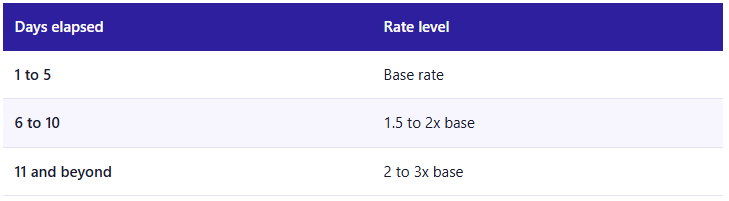
Both are charged per day on a tiered escalating structure.
Tiers and multipliers differ by carrier, but the escalating shape is consistent. Being a few days late and being two weeks late are not proportionally different costs.
What causes it
Customs delays
The most common trigger. A document problem, a disagreement over HS classification, or selection for inspection all hold the container in the terminal while demurrage accumulates.
Late document arrival
Cargo cannot be released without the original bill of lading. In letter of credit transactions especially, documents take time moving through the banking chain. The vessel arriving before the paperwork is a routine occurrence.
No trucking available
Without a truck, the container stays put. Peak season and holiday periods make this worse.
Slow return
After unloading, the empty container has to go back. A distant depot or a full return booking schedule builds detention. Slow warehouse unloading does the same.
What you can prevent
Send documents ahead of the vessel. Courier the original bill of lading in advance, or use a Surrendered B/L or Sea Waybill where possible to eliminate the wait entirely. Worth considering outside letter of credit transactions.
Check customs documents before arrival. Discovering an error after the vessel berths means the clock is already running. Verifying at the shipment stage is what actually prevents the cost.
Put free time in writing. Verbally agreed day counts turn into disputes. Get the number into the quote or contract.
Book trucking against the ETA. Once you have an arrival estimate, reserve inland transport to match it rather than scrambling afterward.
Who pays
It follows the Incoterm. Under terms where the buyer bears costs past the destination port (FOB, CFR, CIF), demurrage and detention at destination fall on the buyer.
Disputes arise when the cause sits with the seller, though. Documents sent late that delay customs clearance, for instance. Defining responsibility in the contract reduces these arguments.
The short version
Demurrage happens inside the terminal, detention outside it. Both start after free time expires and escalate in tiers. When reviewing quotes, confirm the free time allowance alongside the freight rate.
Comments 0