LCL vs FCL: Which Should You Choose?
Book a whole container, or share space with other shippers? Deciding on cargo volume alone can cost you more than it saves, because the two options are priced on completely different logic.
What the two terms mean
FCL stands for Full Container Load. You rent an entire container and load only your cargo. You pay for the container whether you fill it or not.
LCL stands for Less than Container Load. When you do not have enough cargo to fill a container, your goods travel alongside other shippers' consignments. You pay only for the space you occupy.
Different pricing units
FCL is charged per container. LCL is charged by volume or weight.
How LCL freight is calculated
LCL measures volume in CBM (cubic meters) and prices from that figure. Multiply length by width by height in meters.
A pallet measuring 1.2m by 1m by 1.5m comes to 1.8 CBM.
But volume is not the only measure. Small dense cargo gets charged on weight instead. The standard conversion is 1 CBM to 1,000kg, and whichever figure is higher applies. This is called R/T, or revenue ton.
Light bulky cargo like textiles gets billed on CBM. Compact heavy cargo like metal parts gets billed on weight.
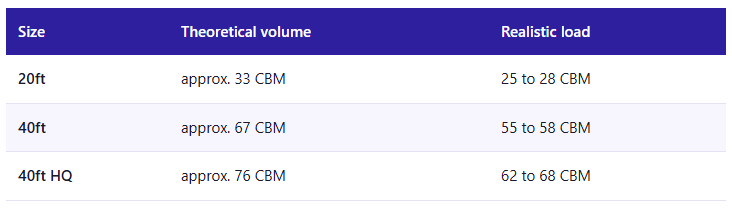
Container capacity in practice
Where the break-even sits
The simple version: small volume means LCL, large volume means FCL. The judgment call comes in the middle range.
Around 15 CBM is the figure commonly cited as the break-even. Above that, a 20ft FCL often produces a lower total cost.
That number moves significantly with route and season, though. When peak season pushes FCL rates up, the break-even climbs past 20 CBM. In slow periods, FCL can win at 10 CBM.
Asking your forwarder for both quotes at once is the only reliable way to compare.
What matters besides cost
Transit time
LCL is slower. Cargo from multiple shippers has to be consolidated into one container at origin and deconsolidated at destination. Both steps add days.
FCL moves as a sealed unit with neither step. When a deadline is tight, FCL can be worth considering even at lower volumes.
Damage risk
LCL cargo shares space with other consignments. Handling frequency rises during consolidation and deconsolidation, and neighboring cargo can affect yours. Moisture-absorbing goods stacked next to electronics, for instance.
For fragile or contamination-sensitive cargo, FCL is safer.
Surcharges
LCL freight looks cheaper but carries CFS charges, consolidation fees, and destination deconsolidation costs. Always request quotes on a total cost basis. Comparing freight alone will not match what you actually pay.
Quick decision guide
Choose LCL when
Cargo is under 15 CBM, schedule has room, you are shipping small quantities of multiple items, or testing volumes on a first transaction.
Choose FCL when
Cargo exceeds 15 CBM, the deadline is tight, goods are damage-prone, or repeat orders have stabilized your volume.
Comments 0